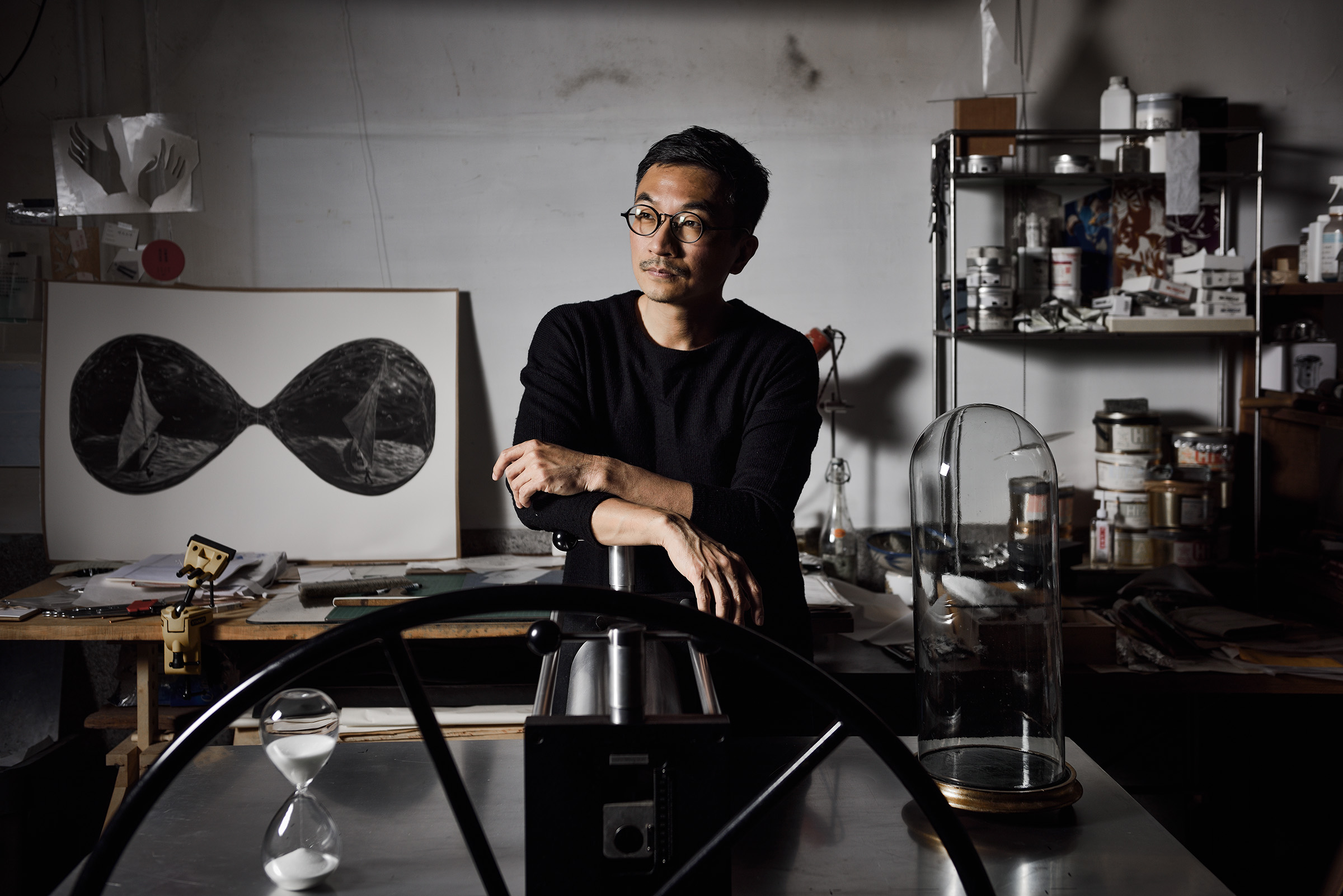


Korea’s Global Voices in Contemporary Art
South Korea has emerged as one of Asia’s most influential cultural forces, producing artists whose works redefine media, identity, history, and technology. In Part 1 of this two-part guide, Exhibique introduces the first five essential Korean contemporary artists—figures whose global impact continues to grow.
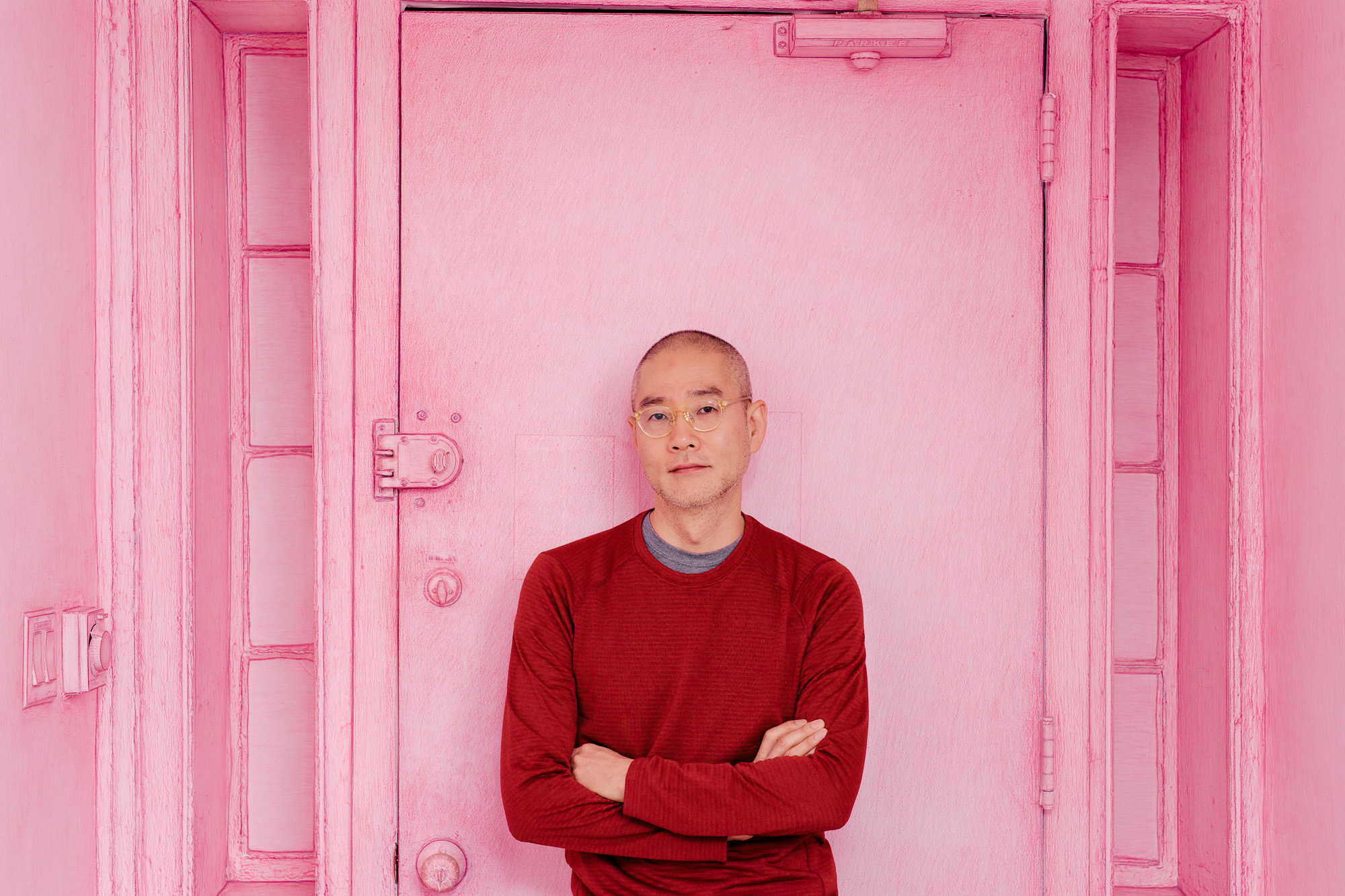
1. Do Ho Suh
Architecture of Memory and Displacement
Do Ho Suh is celebrated for his ethereal fabric sculptures—full-scale recreations of his former homes, hallways, and rooms made from translucent polyester. His works explore migration, identity, and what it means to belong.
Why he matters:
- One of Korea’s most internationally recognized installation artists
- His textile “home” structures became iconic in museums worldwide
- Interrogates personal history through architectural memory
Key works: Home Within Home, Rubbing/Loving, Staircase
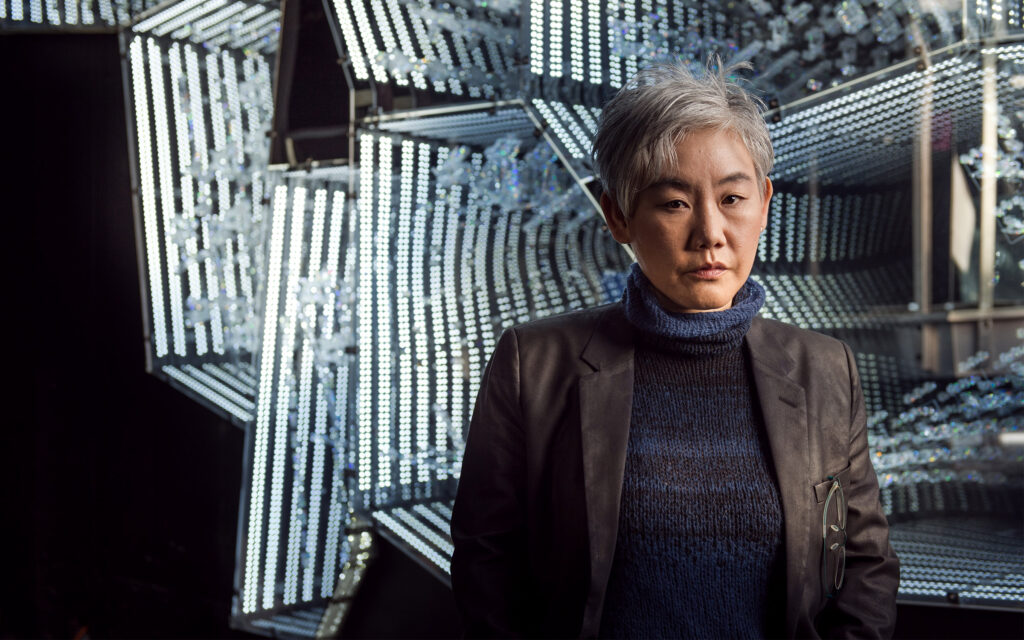
2. Lee Bul
Futurism, Utopias, and the Female Body
Lee Bul’s practice spans sculpture, installation, and performance. Her cyborg-inspired works from the 1990s tackled gender, technology, and power, while her later installations explore failed utopias and architectural dreams.
Why she matters:
- One of the most influential female artists in Asia
- Blends feminist theory with sci-fi aesthetics
- Exhibited at MoMA, Mori Art Museum, and the Venice Biennale
Key works: Cyborg Series, Aubade, Mon grand récit
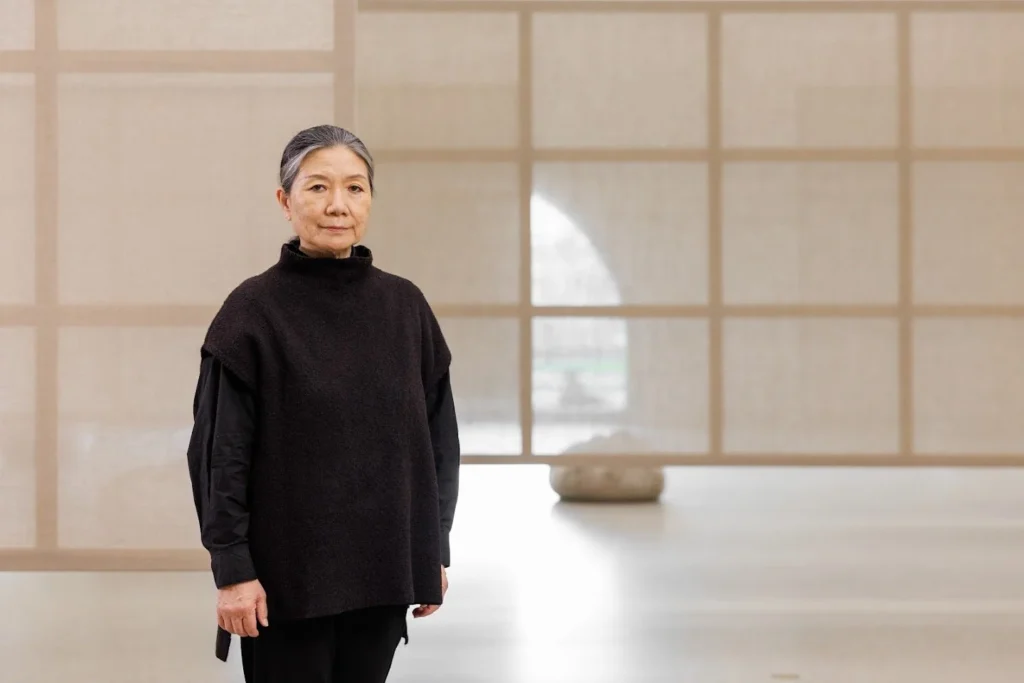
3. Kimsooja
Stillness, Labor, and the Ritual of Being Human
Kimsooja works with video, installation, and performance, exploring themes of migration, labor, and universal human experience. Her famous “A Needle Woman” performances embody meditative presence amid crowded cities.
Why she matters:
- A global conceptual art icon
- Uses the body as a tool for stillness and contemplation
- Known for minimal yet highly poetic installations
Key works: A Needle Woman, To Breathe, Bottari
4. Park Seo-Bo
Dansaekhwa Master and Minimalist Innovator
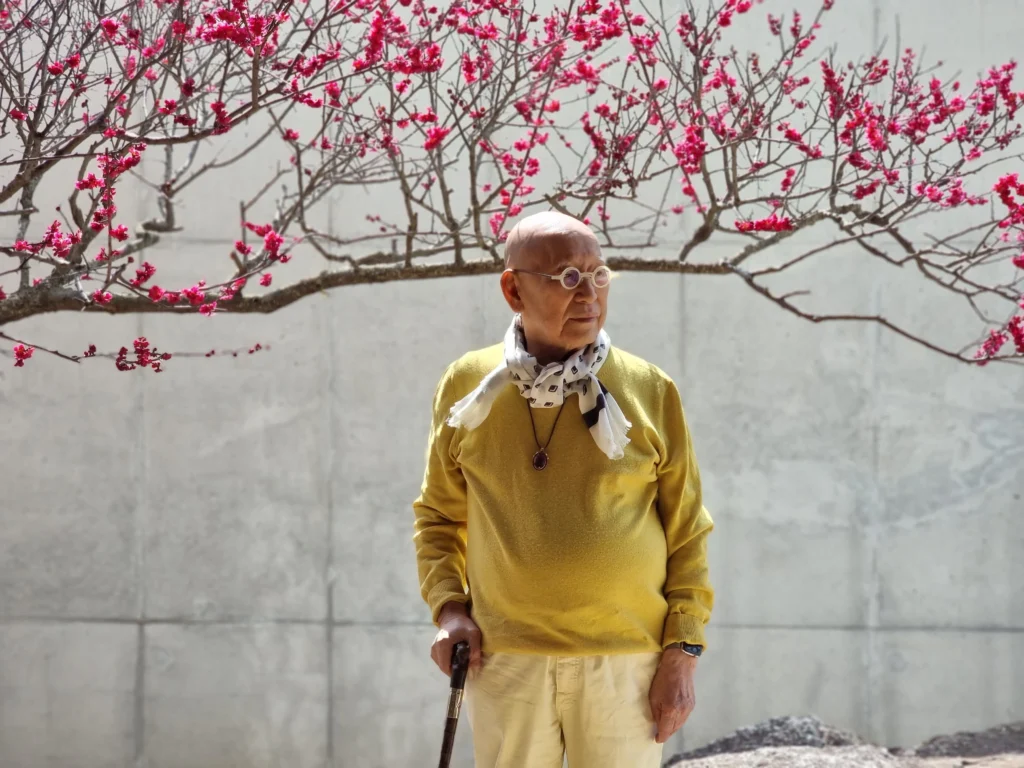
Park Seo-Bo is one of the founding figures of Dansaekhwa, Korea’s monochrome painting movement. His “Écriture” series—repetitive, meditative markings carved into wet paint—embodies both materiality and spiritual discipline.
Why he matters:
- A core leader of Korea’s most important postwar movement
- Influenced countless painters in Asia and beyond
- Market and museum presence continue to rise globally
Key works: Écriture series

5. Haegue Yang
Sensory Installations and Material Intelligence
Haegue Yang creates multisensory installations using Venetian blinds, fans, bells, and everyday materials. Her works examine migration, abstraction, and relationships between human and environment through movement and light.
Why she matters:
- Exhibited at Tate Modern, MoMA, and Documenta
- Known for transforming ordinary materials into complex spatial experiences
- Combines craft, choreography, and conceptual thought
Key works: The Intermediates, Sonic Sculptures, Dress Vehicles