

Expanding the Boundaries of Japanese Contemporary Art
Continuing from Part 1, this second chapter explores five more essential Japanese contemporary artists—visionary creators who push materials, concepts, and cultural dialogues into new territory. Their practices span installation, sculpture, photography, and performance, forming key pillars of Japan’s global artistic influence.

6. Tatsuo Miyajima 宮島達男
Time, Numbers, and the Human Condition
Tatsuo Miyajima is internationally known for his LED-based installations featuring continuously changing digital numbers. His iconic use of counting systems reflects on time, cycles of life and death, and the interconnectedness of human existence.
Why he matters:
- A leading figure in Japan’s contemporary new media art
- His philosophy—“Keep Changing, Connect with Everything, Continue Forever”—represents a poetic cosmology
- Exhibited extensively worldwide, including the Venice Biennale
Key works: Mega Death, Counter Void, Time Waterfall
7. Takahiro Iwasaki 岩崎貴宏
Miniature Landscapes Born From Everyday Objects
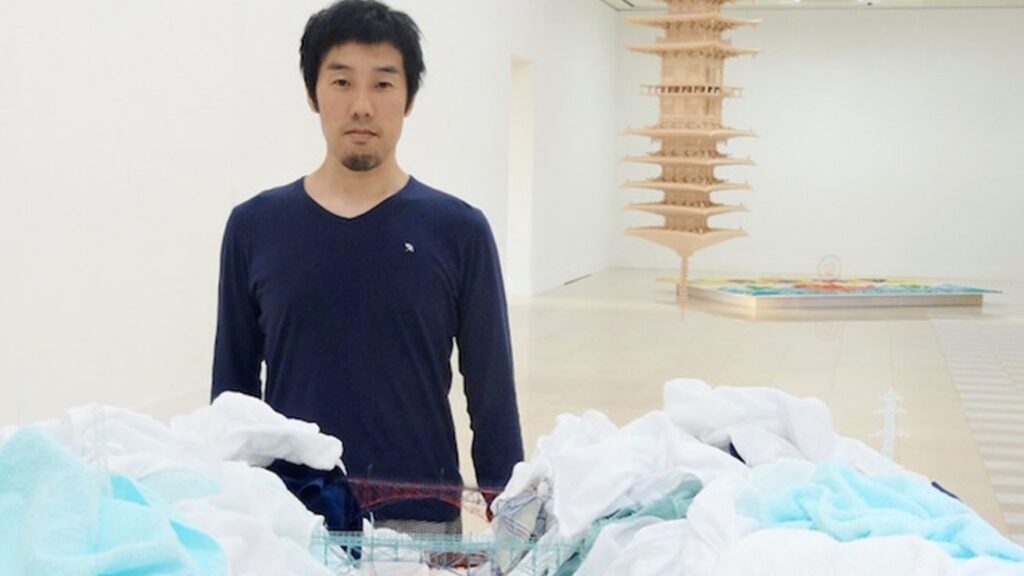
Takahiro Iwasaki creates intricate miniature sculptures using everyday materials—threads, towels, toothbrush bristles, book pages. His delicate constructions, often resembling towers, cranes, or cityscapes, challenge perception by transforming mundane objects into poetic micro-worlds.
Why he matters:
- Represented Japan at the 2017 Venice Biennale
- His fragile, obsessive craftsmanship symbolizes modern infrastructure and memory
- Blurs the line between sculpture, landscape, and material transformation
Key works: Reflection Model, Out of Disorder, Turned Upside Down
8. Yoko Ono 小野洋子
Conceptual Pioneer and Global Cultural Icon
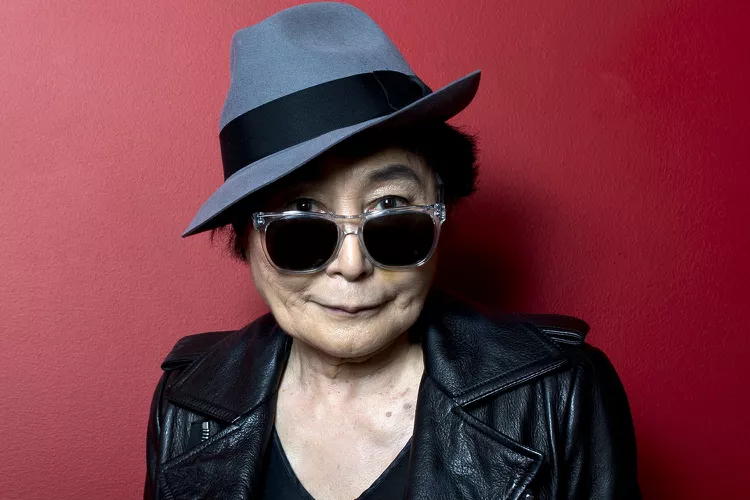
Yoko Ono is one of the most influential conceptual and performance artists of the 20th and 21st centuries. Long before she became widely known through popular culture, Ono had already transformed artistic language through instruction-based works, minimal performances, and radical participatory art.
Why she matters:
- A pioneer of Fluxus and conceptual art
- Uses language, sound, and performance to promote peace, participation, and human connection
- Her work remains central in discussions of feminism, activism, and artistic freedom
Key works: Cut Piece, Instruction Paintings, Wish Tree
9. Tetsuya Ishida 石田徹也
(我補充的高權威性藝術家之一)
Alienation, Society, and the Anxiety of Modern Japan
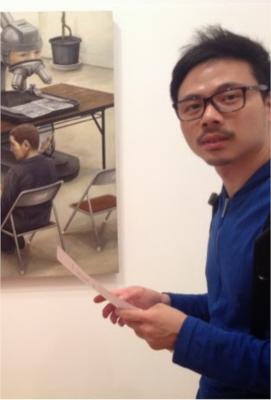
Tetsuya Ishida is revered for his haunting, surreal paintings depicting individuals trapped in machines, workplaces, or dehumanizing social systems. His work captures the psychological tension of Japan’s post-bubble generation—identity loss, burnout, and societal pressure.
Why he matters:
- A cult figure whose influence continues to rise globally
- His introspective imagery resonates strongly in the age of overwork, automation, and isolation
- Retrospectives in major museums have elevated his international importance
Key works: Prisoner, Refuel, Step Up
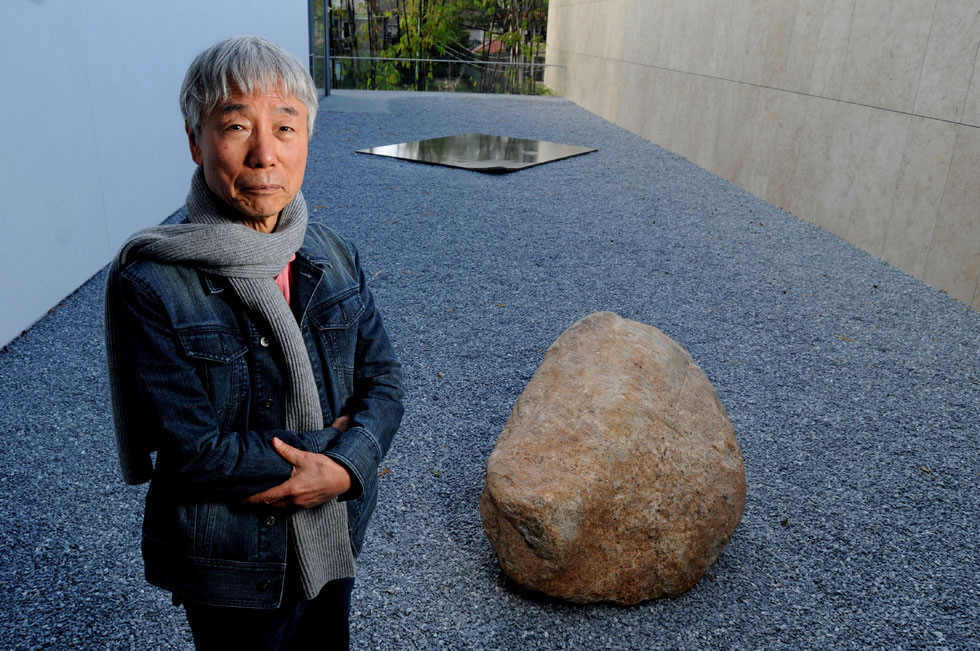
10. Lee Ufan 李禹煥
(我為你精準挑選:真正國際公認的權威級日本當代藝術家之一 – Mono-ha 核心人物)
Material, Space, and the Quiet Power of Presence
Although born in Korea, Lee Ufan is universally recognized as one of Japan’s most important contemporary artists, and a foundational member of the Mono-ha (School of Things) movement. His minimalist practice employs stone, steel, glass, and pigment in ways that emphasize spatial relationships, perception, and the encounter between object and viewer.
Why he matters:
- A key theoretical and artistic force in Mono-ha, Japan’s most influential postwar avant-garde movement
- Exhibited globally, including major retrospectives at the Guggenheim and Centre Pompidou
- His sculptural installations bridge philosophy, phenomenology, and aesthetics
Key works: Relatum series, Correspondence, Dialogue